Put Your Phone Down
An exam-style workout in four parts: jigsaw puzzles against the phone, three animals back from the edge, a teenager on perfect lives online, and six ways to say the same thing in other words.
Warm-up
Quick answers, one card at a time. Ask and answer with a partner, or with me, and tap a card when you have answered it.

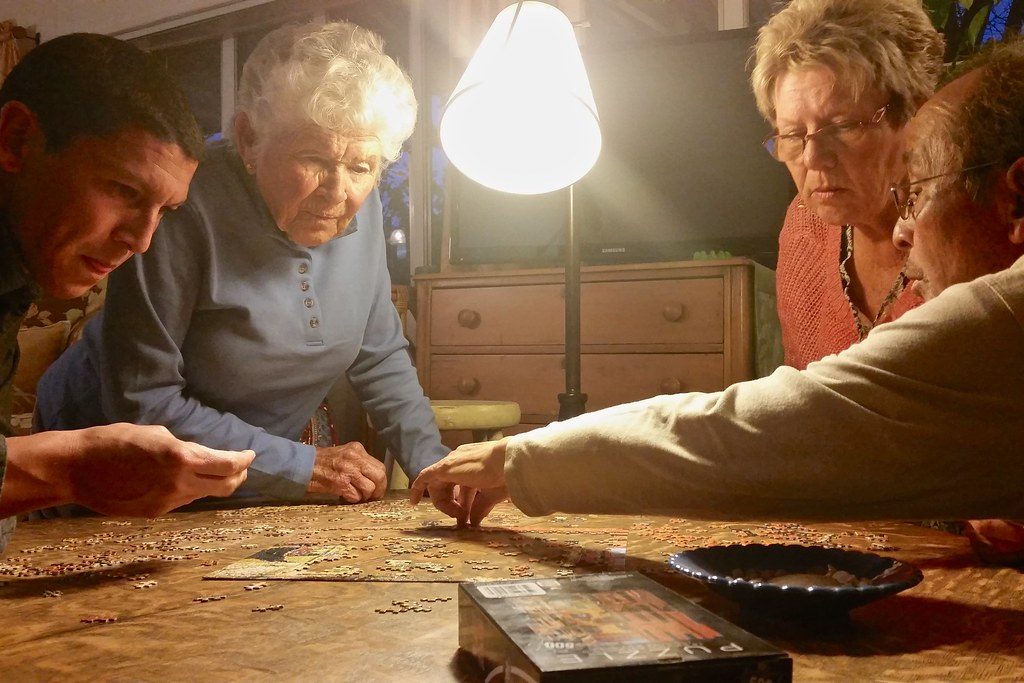
Put your phone down for an hour. Today is an exam-style workout: three short texts, the four classic Use of English tasks, and six structures that let you say the same idea in different words. The questions below already use all six. Can you spot them?
Useful language
Verbs and expressions
Eight verbs and expressions from today's texts and exam tasks. Click a word, then click its meaning. Correct pairs turn green. The audio button says the word.
Complete the sentences
Click a word in the bank, then click a gap. Click a filled gap to clear it. Read each sentence to the end: it has its own clue, and only one option fits.

 Tickets for the final
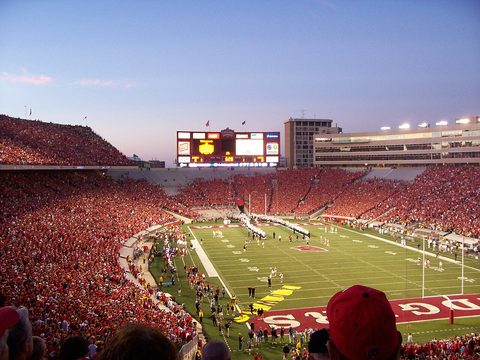
_____ in ten minutes, and thousands of fans who were still waiting online got nothing.
 The storm was so strong that the city
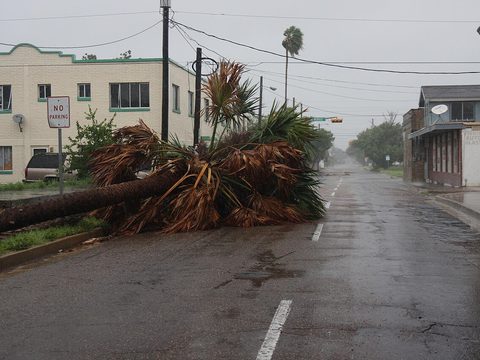
_____ the parade the night before and asked everyone to stay home.
 When the power went out, we
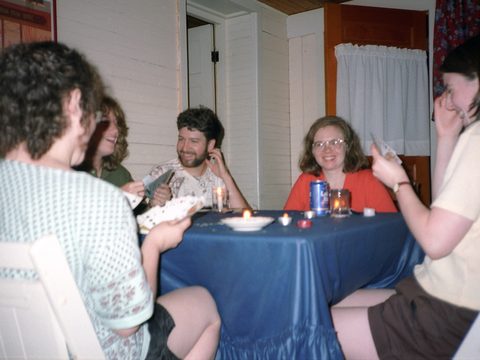
_____ the candles and an old deck of cards, and it turned into a great evening.
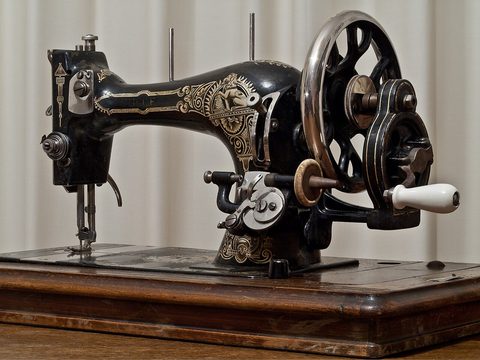 My aunt
_____ me her old sewing machine when she moved into a smaller apartment.
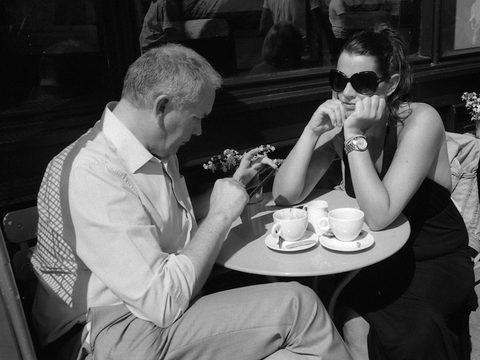 Can you
_____ your phone for five minutes? I'm trying to tell you something important!
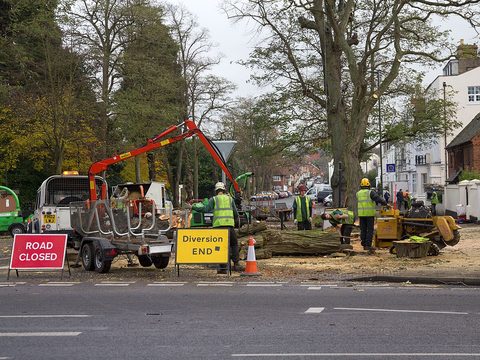 The workers had to
_____ two old trees because their roots were breaking the sidewalk.
 The band is going to
_____ next spring and play in thirty cities in two months.
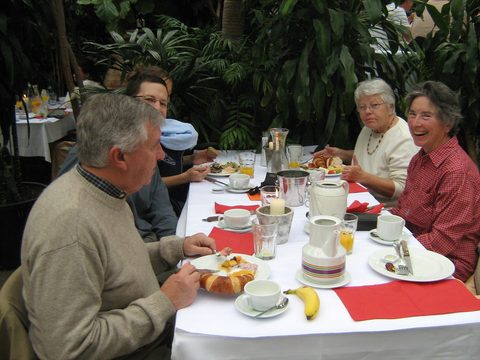 My parents both work long hours, so on Sundays we turn off the TV and spend some
_____ together.
Same meaning, new words
Read the six structures, then answer the questions. Each question checks what one of them really means.

One idea, two sentences. In a key word transformation you keep the meaning and rebuild the grammar around one word you cannot change. The exam loves the same few structures, and today's task uses six of them. Learn them in pairs: when you see the first form, the second one should come to mind.
- be in favor of + -ing → it would be a good idea to + verb: Tom was in favor of taking the train. → Tom thought it would be a good idea to take the train. Negative: it wouldn't be a good idea to… · Question: Would it be a good idea to…?
- have the talent to / be good enough to → so + adjective + that: She is so fast that she could race for her country. With a noun, use such: She is such a fast runner that…
- direct question → reported question with if: "Are you hungry, Leo?" asked Mia. → Mia asked Leo if he was hungry. With a question word inside, keep it and use statement order: "Do you know where the bank is?" → She asked me if I knew where the bank was.
- for ages → spend / be a long time + -ing: We waited for ages. → We spent a long time waiting. / We were a long time waiting.
- Everyone says that… → subject + is said to + verb: People say that the hotel is haunted. → The hotel is said to be haunted. An action in progress: is said to be + -ing. The past: is said to have + past participle. Plural subject: are said to.
- would prefer not to → would rather not + base verb: I'd prefer not to drive. → I'd rather not drive. Question: Would you rather stay in? · Short answers: Yes, I'd rather stay in. / No, I'd rather not.
- A phrasal verb for a one-word verb: cancel → call off. A noun can go before or after off (call off the game / call the game off); a pronoun goes in the middle (call it off).
- The exam rules: don't change the key word; write between two and five words, including the key word; contractions count as two words (I'd = I would).
-
"The museum is said to be free on Sundays." What does it mean?
Is said to be = people say (that) it is. We don't know who says it, and it isn't the museum talking. This is the SAID structure of Exercise 09.
-
"She was a long time getting ready." What does it mean?
Be a long time + -ing = spend a long time doing something. It is about how long the action took, not about when it happened.
-
"I'd rather not call off the trip." What does the speaker want?
Call off = cancel, and I'd rather not = I'd prefer not to. So the speaker prefers not to cancel: the trip should happen. Call alone is a phone call; call off is a different verb.
-
"He asked me if I knew the answer." What were his exact words?
In a reported question, if replaces the yes/no question, the word order is a statement (I knew), and the tense moves one step back: know becomes knew. His words were in the present, to "you".
-
"The test was so easy that everybody finished early." Which sentence is true?
So + adjective + that shows a result: the test was easy, and the result was that everybody finished early. Too … to says the opposite: that something is impossible.
-
"Kate thought it would be a good idea to book the tickets early." What was Kate's opinion?
Thinking that something is a good idea = being in favor of it. Notice the -ing after the preposition: in favor of booking, never of book.
Part 1: which word fits?
Sentences 1 to 8 retell a short article about jigsaw puzzles, one gap each. Choose the option that fits. Questions 9 and 10 check the grammar around two of the words.
-
With the holiday season ___, now is the perfect time to plan some cozy nights at home.
When a date or a season is approaching, it is coming closer. Something appears when you suddenly see it, and next needs a time word to work here (next week, next month).
-
On the first cold, rainy evening, why not ___ that old jigsaw puzzle from the closet?
Informal: to break out something is to take it out and start using it, often for a special moment (break out the board games). Break in is to enter a building by force; break down is what a car does when it stops working.
-
Puzzles and board games are a great excuse to ___ your phone and really talk to the people around you.
Get off your phone = stop using it, like get off the computer. You go out of a place and get away from a place or a problem; neither one takes your phone as its object.
-
Even if you never enjoyed ___ jigsaw puzzles before, putting the pieces together on a rainy afternoon could change your mind.
A collocation: you do a puzzle, a crossword or an exercise. You make a puzzle only if you are the person who creates it, and you fix something that is broken.
-
At the start of the pandemic, so many people wanted puzzles that the most popular ones were ___ fast, and they were hard to find.
Sell out = sell every one until none are left, which is why they were hard to find. Sell off means selling things cheaply to get rid of them, and sell in is not used here.
-
No puzzle at home? No problem: there are ___ of great ones online, for every age and every taste.
Plenty of = a lot of, more than you need. Lot needs a in front (a lot of), and enough goes straight before the noun, with no of (enough great puzzles).
-
Looking for something to ___ your loved ones this year? A beautiful jigsaw is always a good choice.
Gift is also a verb, very common in informal English: gift someone something. Present needs with (present someone with a prize), and to play someone is to compete against them in a game.
-
Try it for one evening: you won't ___ putting your phone down, and you'll probably want to do it again.
You won't regret + -ing = you will not be sorry that you did it. The end of the sentence rules out enjoy (why do it again if you didn't enjoy it?), and believe is never followed by -ing like this.
-
Which sentence is correct?
Regret + -ing is about something you did. Regret to + verb exists, but only for giving bad news in formal language: We regret to inform you that the flight is canceled.
-
Which sentence is WRONG?
Lot never works alone here: it is a lot of or lots of. Plenty of, on the other hand, never takes a.
Phrasal verbs from the options
In Exercise 05, several of the wrong options were real phrasal verbs, and they are worth learning. Part A: click a phrasal verb in the bank, then click a gap. Part B: the word order of phrasal verbs.

A · Complete the sentences
- The police think that somebody _____ through the kitchen window while we were away, and now our TV is gone.
- Our car _____ on the highway, so we waited two hours for a tow truck.
- I'm so tired of work. I just want to _____ from it all for a week at the beach.
- It was Friday night, so we _____ for dinner and a movie.
- The store is closing next month, so it has to _____ everything on its shelves at half price.
- After a terrible first half, the team _____ and won the game 3–2.
- She finally _____ her phone and looked at the people around the table.
- I've been _____ this 2,000-piece puzzle for three weeks, and it still isn't finished.
B · Where does the pronoun go?
-
Which sentence is correct?
Turn off can be separated. With a pronoun (it, them, her), the pronoun must go between the verb and off. And of is a different word: off has two f's.
-
Which sentence is WRONG?
With a noun, both positions work: put her phone down or put down her phone. With a pronoun, only the middle: put it down. Some phrasal verbs never separate at all: I'm working on it, not working it on.
Part 2: think of the word
No options this time. Sentences 1 to 8 retell a short article about three species that almost disappeared in the United States. Write ONE word in each gap. Then answer the two questions in Part B.
- Prepositions of place and company: among = in a group of, alongside = next to, together with, over = more than (over a hundred people came).
- Once = at some time in the past: This town was once a fishing village.
- Contrast: although + a clause, and then no but; or two separate ideas joined by but.
- Quantity: as many (+ plural noun) as, as much (+ uncountable noun) as.
- Even adds surprise, for the most extreme item: He works every day, even on Sundays.
A · Write the missing word
-
1These three species got protection from the U.S. government a little ___ fifty years ago: a bit more than half a century.
-
2Many species were in that first protected group, and all three of these animals were ___ them.
-
3Their numbers are healthy today, but each of these species was ___ nearly extinct.
-
4Long before the law, Native American peoples shared their land with these animals: for many centuries, they lived ___ them.
-
5___ these peoples changed the land, for example by burning parts of it to grow food, they still took care not to kill too many of the animals.
-
6Native peoples hunted with care, ___ the Europeans who came to settle in the early 1800s saw the land in a very different way.
-
7To make room for new homes and towns, the settlers cut down whole forests, and they killed ___ many animals as they liked.
-
8They hunted for food, for materials, and ___ for sport.
B · Right or wrong?
-
Which sentence is correct?
As many + plural noun + as = the same number as. Too many means more than is good, and so many goes with that (so many photos that my phone was full); neither one is followed by as.
-
Which sentence is WRONG?
Although and but do the same job, so use one of them, never both. In Portuguese embora…, mas is also wrong, and it's a very common mistake in English.
Part 3: form the word
Sentences 1 to 8 retell a teenager's essay about life on social media. Use the word in capitals to form a word that fits the gap. Decide first what kind of word the gap needs: a noun, an adjective, an adverb. Then check: singular or plural? Positive or negative?

- People: -er (teach → teacher, lead → leader).
- Nouns: -ion (protect → protection), -ity (active → activity).
- Adjectives: -ive (create → creative), -ed (excite → excited), -able (enjoy → enjoyable).
- Adverbs: -ly (quick → quickly, usual → usually).
- Negative prefixes change the meaning, not the type of word: in- (complete → incomplete), un- (happy → unhappy), im- before p (patient → impatient).
A · Form the word
-
FOLLOWSome news channels now have more ___ on social media than viewers on TV.
-
MOSTOur attitudes are different now because of social media, ___ among young people.
-
INFLUENCEYoung people are easily ___ by what they see online, so they often copy it.
-
SECUREComparing ourselves with perfect people online all day has increased our ___.
-
ATTRACTThe post shows a very ___ couple on a beach, relaxed and smiling, with no stress at all.
-
CONSTANTWe are ___ watching other people's perfect lives, from morning to night.
-
OBVIOUS___, everyone wants a perfect family, a perfect job and a perfect home.
-
PERFECTBut ___ doesn't exist, so we are chasing something that nobody can have.
B · Right or wrong?
-
Which sentence is correct?
A verb needs an adverb, not an adjective: constantly checking. And after is, the verb must be in -ing to make the present continuous.
-
Which sentence is WRONG?
Each word takes its own negative prefix, and before p it is often im-: impossible, impatient, imperfect. Unpossible does not exist.
Part 4: key word transformations
Complete the second sentence so that it has a similar meaning to the first. Use the word in capitals without changing it, and write between two and five words, including that word. The six pairs in Exercise 04 are your map.
A · Rewrite with the key word
-
IDEAMary was in favor of visiting the museum. → Mary thought it would be ___ to the museum.
-
THATJohn has the talent to become a concert pianist. → John is so ___ could become a concert pianist.
-
IF"Do you know when the concert starts, Anne?" asked Sarah. → Sarah asked Anne ___ time the concert started.
-
LONGI knocked on Tom's door for ages, but I got no reply. → I ___ knocking on Tom's door, but I got no reply.
-
SAIDEveryone says that the singer is planning to go on a world tour next year. → The singer ___ planning to go on a world tour next year.
-
CALLI'd prefer not to cancel the party. → I'd rather ___ the party.
-
SOThe puzzle was too difficult for me to finish. → The puzzle was ___ I couldn't finish it.
-
RATHERI'd prefer to stay home tonight. → ___ home tonight.
B · Right or wrong?
-
Which sentence is correct?
A reported question has no question word order anywhere: if we knew, not if did we know, and how old the castle was, not how old was the castle.
-
Which sentence is WRONG?
Would rather takes the base verb, with no to: I'd rather not go. Would prefer is the one that needs to: I'd prefer not to go.
Phones, puzzles and perfect lives
Part A is about the three texts of the exam tasks, Part B is about your life, and Part C is for your opinions. Talk with a partner, or with me, and try to use one of the six structures from Exercise 04 in each answer.

Useful language
An exam essay
Exam-style task, 100–140 words. In your English class you have been talking about phones and free time. Now your teacher has asked you to write an essay: "Young people spend too much time on their phones." Do you agree? Write about 1. free time, 2. family and friends, and 3. your own idea. Give reasons for your point of view, and use at least two structures from Exercise 04 (would rather, is said to, so … that) and one phrasal verb from today.
My results
Check your score, then copy it and send it to your teacher on WhatsApp.

One job for this week. Put your phone in another room for one evening. Then send me a one-minute voice message: what did you do instead, and would you do it again? Use I'd rather, I spent a long time + -ing and one phrasal verb from today.