The Never-Ending Job Interview
An exam-style workout in four parts: a job hunt with too many interviews, the trash that comes with holiday gifts, why young people wait to start a family, and six ways to say the same thing in other words.
Warm-up
Quick answers, one card at a time. Ask and answer with a partner, or with me, and tap a card when you have answered it.

Grab a coffee: this is Grammar Plus, part two. Another exam-style workout: three short texts about work, holiday gifts and family, the four classic Use of English tasks, and six structures that say the same idea in different words. The questions below already use five of them. Can you find them?
Useful language
Work, gifts and homes
Eight words and expressions from today's three texts. Click a word, then click its meaning. Correct pairs turn green. The audio button says the word.
Complete the sentences
Click a word in the bank, then click a gap. Click a filled gap to clear it. Read each sentence to the end: it has its own clue, and only one option fits.

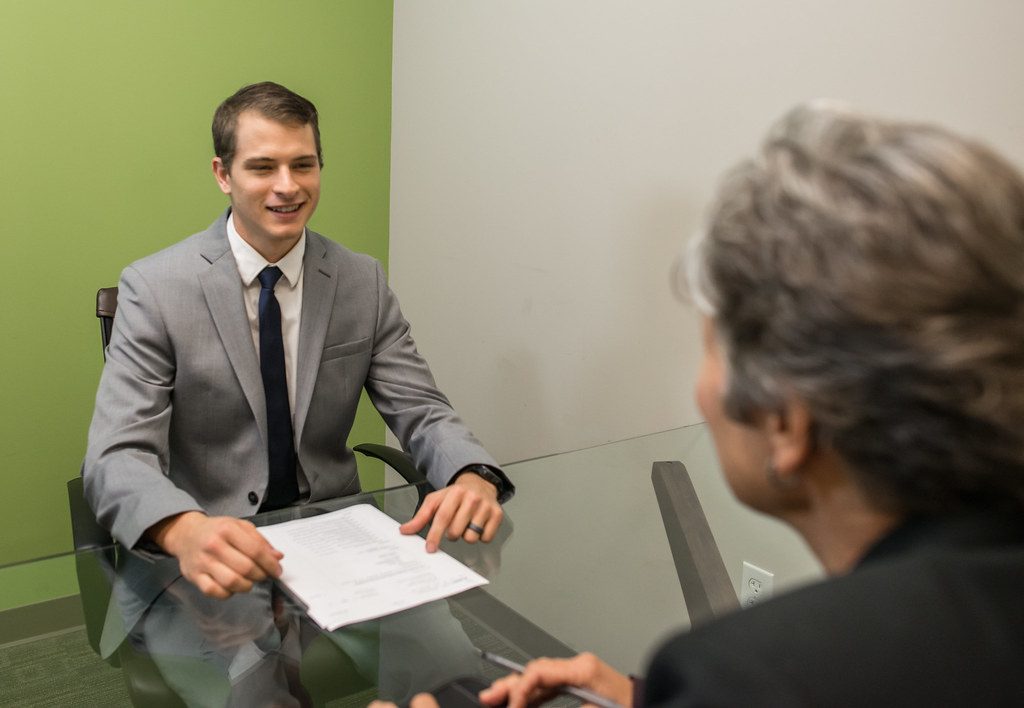
 As a young
_____, she sent her resumé to forty companies before one of them finally called her back.
 The bank called her on Friday with a
_____: a good salary, a company car and four weeks of vacation.
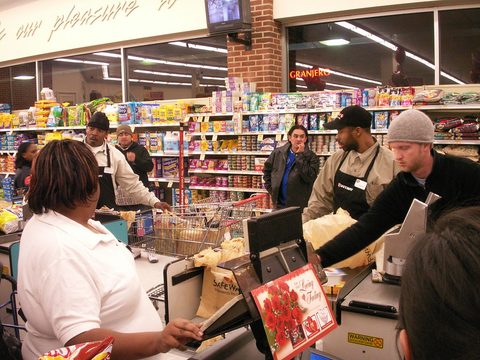 Ten years after he started as a cashier, he
_____ to manager of the whole store.
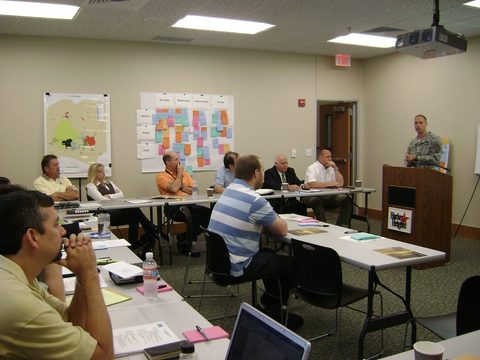 The meeting was supposed to end at three, but it
_____ until almost six, and everyone left exhausted.
 The kids tore off the colorful
_____ in seconds to see what was inside the boxes.
 Every morning, dozens of garbage trucks drive out to the
_____ outside town and empty their loads there.
 Don't
_____ that old sofa! Somebody could still use it, so give it to a neighbor instead.
 After ten years of paying rent, they finally bought a small house and became
_____.
Same meaning, new words
Read the six structures, then answer the questions. Each question checks what one of them really means.

Two sentences, one idea. In a key word transformation you keep the meaning and rebuild the sentence around one word you cannot change. Today's task uses six structures that come up again and again in the exam. Learn them in pairs: when you see the first form, the second one should come to mind.
- because + clause → due to the fact that + clause: We stayed home because it was raining. → We stayed home due to the fact that it was raining. With a noun, it is just due to: due to the rain.
- manage to + verb → succeed in + -ing: He managed to fix the printer. → He succeeded in fixing the printer. Negative: He didn't succeed in fixing it. · Question: Did he succeed in fixing it? · Short answers: Yes, he did. / No, he didn't.
- in my opinion / I don't mind → as far as I'm concerned: In my opinion, the movie was too long. → As far as I'm concerned, the movie was too long. Here concerned is not "worried": the whole phrase means "for me, from my point of view".
- so + adjective → such (a/an) + adjective + noun: The trip was so tiring. → It was such a tiring trip. Plural and uncountable nouns take no a: such nice people, such bad weather. Both can add a result with that: It was such a tiring trip that we slept all day.
- be similar in appearance → look like + noun or pronoun: Tom and his dad have almost the same face. → Tom looks like his dad. Question: Does Tom look like his dad? · Short answers: Yes, he does. / No, he doesn't. Careful: What does she look like? asks about appearance; What is she like? asks about personality.
- someone else does it for you → get / have + object + past participle: A mechanic fixed my bike. → I got my bike fixed. / I had my bike fixed. Negative: I didn't get it fixed. · Question: Where do you get your hair cut?
- The exam rules: don't change the key word; write between two and five words, including the key word; contractions count as two words (I'm = I am).
-
"I had my phone screen fixed yesterday." Who fixed the screen?
Have + object + past participle = someone else did the job for me. Compare I had fixed my screen (past perfect): there, I did it myself, before another moment in the past. This is the REPAIRED structure of Exercise 09.
-
"As far as I'm concerned, four interviews are enough." What is this sentence?
As far as I'm concerned introduces the speaker's own point of view, so other people may disagree. It has nothing to do with being worried, even though concerned alone can mean that.
-
"Did you succeed in finding a new apartment?" What does the question mean?
Succeed in + -ing = manage to + verb: you tried, and you got the result. The question is about the result, not about starting or wanting.
-
"Does Lucas look like his mother?" What is the question about?
Look like is about appearance. For personality we ask Is Lucas like his mother?, and like as a verb (Does Lucas like…?) is about enjoying or loving someone.
-
"The store closed early due to the fact that the power went out." Which sentence means the same?
Due to the fact that gives the cause, exactly like because: the power went out first, and that made the store close. With so, the cause and the result change places.
-
"It was such a hot day that we stayed inside." Which sentence is true?
Such a + adjective + noun and so + adjective say the same thing, and that brings the result: we stayed inside. The heat was the cause of staying inside, not the result of it.
Part 1: which word fits?
Sentences 1 to 8 retell a short article about job interviews that never seem to end, one gap each. Choose the option that fits. Questions 9 and 10 check the grammar around two of the words.
-
Every job seeker ___ the news of a second interview, because it is a good sign.
To welcome something is to be glad to receive it. You accept an invitation or an offer (you say yes), but you accept the news only when it is bad and you can't change it. To disregard is to ignore, and nobody ignores good news.
-
A second interview ___ the company's interest in you: it's a good sign, even if it isn't proof.
To signal something is to show it through a sign. It can't be proves, because the sentence itself says it isn't proof. To highlight is to make people notice something important, like a marker pen on a page.
-
A third interview feels even better. It might even be the ___ to a job offer, the step that comes just before it.
A precursor is something that comes before something else and leads to it: a precursor to an offer. A pioneer is a person who does something first, and a beginner is a person who has just started learning.
-
But what happens when the process ___ to a fourth, fifth or sixth round, and nobody tells you which one is the last?
Drag on = to continue for too long, slowly and annoyingly. Shut down = to close or stop working, and put off = to delay, which needs an object (put something off).
-
Mike Conley, a software engineering manager in Indiana, lost his job during the pandemic. Five companies later told him they had to ___ hiring because of Covid-19, but only after his final interview.
To delay something is to make it happen later: delay hiring, delay a flight. Wait needs for (wait for news), and late is an adjective, not a verb. The worst part for Mike, who was 49: the news came after he had done every interview.
-
Three other companies interviewed him round after round, but when it was time to ___ him an offer, they stopped.
The collocation is make someone an offer. We never say do an offer, and accept is what the candidate does, not the company: nobody accepts him an offer.
-
Instead, those three companies decided to promote ___: they gave the job to someone who already worked for them.
To promote internally is to give the better job to a person from inside the company. Inwardly means in your mind, without showing it (inwardly angry), and indoors means inside a building.
-
Later, he passed three rounds of interviews for a director-level ___ at a company he really liked, and then an email asked him to schedule six more.
A position is a job in a company. Work is uncountable, so a director-level work is impossible, and labor is hard physical work, or the workers who do it. When Mike asked if these were the final rounds, the answer was: "We don't know yet."
-
Which sentence is correct?
Make + person + offer, with no to: made him an offer. With to, the person goes at the end: made an offer to him. And never do an offer.
-
Which sentence is WRONG?
A phrasal verb with no object stays in one piece: drag on, go on. The time comes after it: dragged on for hours.
Words from the options
In Exercise 05, most of the wrong options were useful words in the wrong place. Part A: click a word in the bank, then click the gap where it belongs. Part B: two small traps.

A · Complete the sentences
- She _____ the invitation to the wedding and started looking for a dress.
- He _____ the warning signs on the road and drove straight into the flooded street.
- The report _____ the three biggest problems in bold red letters at the top of the first page.
- The DNA test _____ that he was innocent, so he walked out of prison after twenty years.
- She was a _____ of online teaching: she was giving classes on the internet long before everybody else.
- This yoga class is for _____, so don't worry if you have never done yoga before.
- The factory _____ last year, and two hundred people lost their jobs.
- I always _____ going to the dentist, and now I have a terrible toothache.
B · Right or wrong?
-
Which sentence is correct?
Job is countable, so it needs a: a new job. Work is uncountable and never takes a: She's looking for work. That is why a director-level work was wrong in Exercise 05.
-
Which sentence is WRONG?
With a noun, put off can go around it or before it (put the meeting off / put off the meeting). With a pronoun like it, only the middle works: put it off.
Part 2: think of the word
No options this time. Sentences 1 to 8 retell a short article about the trash that comes with holiday gifts. Write ONE word in each gap. Then answer the two questions in Part B.
- Verb + preposition: waste time on something, depend on someone.
- Finished: The game is over. Summer is over.
- Enough comes after an adjective: old enough to drive, tall enough to reach the shelf.
- Two points in time: between … and …; a range of examples: from … to … (from kids to grandparents).
- Adding: as well as = and also; also goes before the main verb (She also speaks French).
- A relative clause about a thing starts with that or which: a job that pays well.
A · Write the missing word
-
1In 2021, the average person in the UK planned to spend £388 ($517) ___ Christmas presents.
-
2About 23 million of those gifts end up in a landfill once Christmas is ___.
-
3Gifts are only part of the problem: the holiday season ___ makes British homes throw away 30% more trash than any other time of the year.
-
4People there throw away about 227,000 miles of wrapping paper, which is long ___ to reach the Moon.
-
5The numbers are similar in the US, where people produce 25% more trash ___ Thanksgiving and New Year's Day, a period of about five weeks.
-
6But Christmas, as ___ as other celebrations during the year, doesn't have to create so much waste.
-
7All around the world, ___ Norway to Japan, there are old traditions that can help.
-
8These are traditions ___ bring children and adults together to make sustainable gifts and holiday decorations.
B · Right or wrong?
-
Which sentence is correct?
In English you spend money on something. Gastar em and gastar com push Brazilians toward in and with, but neither one works here.
-
Which sentence is WRONG?
Enough goes after an adjective (big enough) but before a noun (enough paper). Enough big is a very common mistake.
Part 3: form the word
Sentences 1 to 8 retell a short article about why many young people are waiting to start a family. Use the word in capitals to form a word that fits the gap. Decide first what kind of word the gap needs: a noun, an adjective or an adverb. Some words need two changes.

- Adverbs: -ly, and a final y becomes i (easy → easily, happy → happily).
- Nouns from adjectives: -ity, and -ble becomes -bil- (possible → possibility, able → ability).
- Nouns from verbs: -ion (educate → education) and -ment (employ → employment).
- Other noun endings: -age (short → shortage) and -ship (leader → leadership, friend → friendship).
- -less = without: home → homeless, care → careless.
- Two changes at once: a prefix and a suffix (pay → repay → repayment).
A · Form the word
-
NECESSARYThe world's birth rate is falling, but that is not ___ news: it has been going down since 1950.
-
FERTILEIn 2021, the world's ___ rate was 2.3 births per woman; in 1990, it was 3.2.
-
PERCENTA US survey found that, among adults ages 18 to 49 with no children, a growing ___ plan to stay that way.
-
CHILDIn other words, more and more people who are ___ now, with no kids at all, expect never to become parents.
-
PLACEIn 2021, every country in Europe had fewer than 2.1 births per woman, the "___ rate" that keeps a population at the same size.
-
STABLEIt isn't hard to see why young people hesitate: financial ___ is harder to achieve than ever.
-
INFLATEThat year, experts warned that high ___ could be on the way in Europe, with prices going up fast.
-
OWNERAnd in many places, home ___ is just a dream, because young people can't afford to buy a house or an apartment.
B · Right or wrong?
-
Which sentence is correct?
A verb takes an adverb, not an adjective: necessarily falling. And after is, the verb needs -ing to make the present continuous.
-
Which sentence is WRONG?
Want needs a noun here (financial stability) or to be + adjective (financially stable). Stable is an adjective, so it can't be the thing they want.
Part 4: key word transformations
Complete the second sentence so that it has a similar meaning to the first. Use the word in capitals without changing it, and write between two and five words, including that word. The six structures in Exercise 04 are your map.
A · Rewrite with the key word
-
DUEBecause it snowed heavily during the night, the highway is closed. → The highway is closed ___ that there was heavy snow the night before.
-
GETTINGDid you manage to get in contact with the boss today? → Did you ___ in contact with the boss today?
-
CONCERNEDI don't care what you do. → As ___ you can do what you like.
-
SUCHThe meal we had in the restaurant was so nice. → It ___ meal in the restaurant.
-
LIKEAre you and your brother similar in appearance? → Does ___ you?
-
REPAIREDThat's the repair shop where I took my car to be fixed last week. → That's where I went ___ last week.
-
SUCHThe interview process was so long that I almost gave up. → It was ___ process that I almost gave up.
-
HAVINGA painter is coming to paint our apartment next week. → We're ___ next week.
B · Right or wrong?
-
Which sentence is correct?
Succeed takes in, and after a preposition the verb takes -ing: succeeded in getting. Succeed to is not used this way.
-
Which sentence is WRONG?
With a singular countable noun, such needs a or an: such a nice meal. Without a noun, use so: so nice.
Jobs, gifts and big decisions
Part A is about the three texts of the exam tasks, Part B is about your life, and Part C is for your opinions. Talk with a partner, or with me, and try to use one of the six structures from Exercise 04 in each answer.

Useful language
An exam essay
Exam-style task, 100–140 words. In your English class you have been talking about looking for work. Now your teacher has asked you to write an essay: "Companies should tell candidates how many interviews there will be before the process starts." Do you agree? Write about 1. the candidate's time, 2. what the company needs to find out, and 3. your own idea. Give reasons for your point of view, and use at least two structures from Exercise 04 (as far as I'm concerned, due to the fact that, succeed in + -ing) and one collocation from Exercise 05.
My results
Check your score, then copy it and send it to your teacher on WhatsApp.

One job for this week. Think of something you did yourself and something you got done by a professional this year. Then send me a one-minute voice message about both. Use I got my … repaired (or cut, painted, fixed), such a … and as far as I'm concerned.