SPEAKING CLUB · TOPIC 3

Artificial Intelligence

Your phone already listens to you, and some cars already drive themselves. Twenty Beginner questions, nineteen Intermediate and seventeen Advanced, all about the machines that learn. Choose your level and talk.

A1-C2 60 min Focus: speaking · 3 levels Home
EXERCISE 01Speaking

Warm-up

Ask and answer with a partner, or with me. Tap a card when you have answered it.

Teacher Alvaro

The machine in your pocket already listens to you. Today we talk about artificial intelligence at three levels: Beginner, Intermediate and Advanced. Choose yours, and open the answer prompts when you need a start.
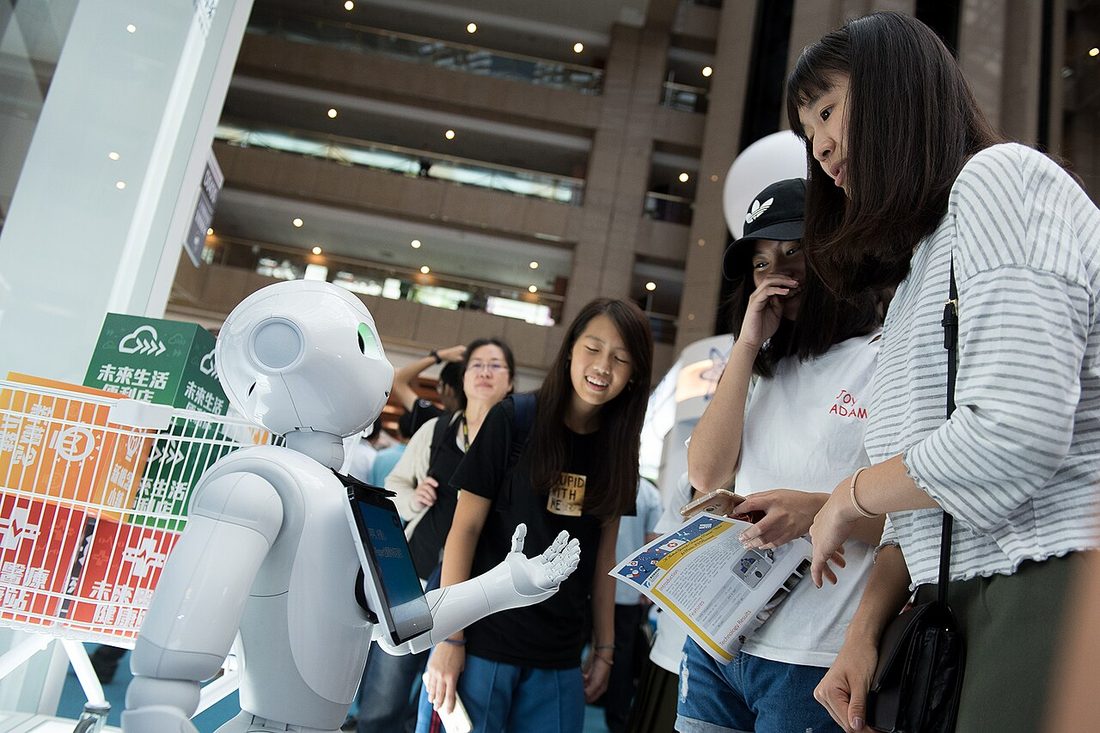
Young people smile at a white humanoid robot with a tablet on its chest at a technology fair
Useful language
I always say "please" to …I never talk to my phone. My favorite robot is … from …It's a good robot because … First, I ask … because …I use … to study English. I've never used …I use my … every day.
AI tools for learning English
Duolingo: short lessons like a game, with AI and a chatbot for conversation practice ELSA Speak: listens to you and corrects your pronunciation right away Babbel: practice with AI for conversation, vocabulary and grammar Rosetta Stone: AI lessons in real-life situations, all in English Memrise: AI and spaced repetition (you see a word again just before you forget it) to learn and remember new words Busuu: AI features, plus feedback from native speakers ChatGPT: a chatbot for conversation practice, questions and explanations Grammarly: corrects the grammar and style of what you write Loora AI: a personal AI English tutor that listens and gives instant feedback Andy English Bot: a chatbot with new words, grammar lessons and exercises every day Langua: conversation practice with role-plays and debates, with instant corrections
0 / 0
EXERCISE 02Vocabulary

Words for talking about AI

Click a word, then click its meaning. Correct pairs turn green. The audio button says the word.

Word
Meaning
EXERCISE 03Vocabulary in context

Complete the sentences

Click a word in the bank, then click a gap. Click a filled gap to clear it. Each word fits in one sentence only.

Teacher Alvaro
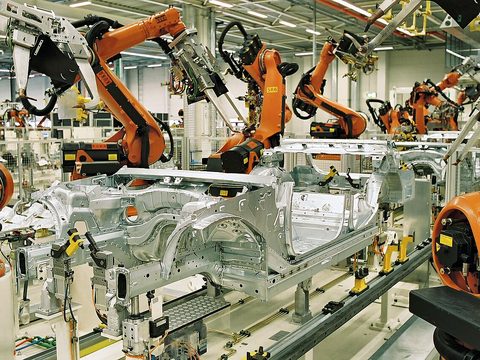
  • In the car factory, a big _____ with two metal arms puts the doors on every car, day and night, and it never gets tired.

  • I typed my question in the chat window on the bank's website, and a _____ answered in two seconds. There was no person there, only a computer program.
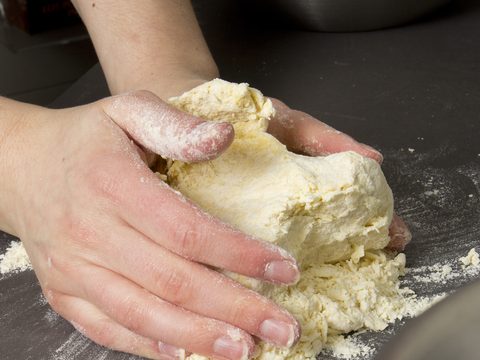
  • My hands are dirty when I cook, so I don't touch my phone. I just talk to the _____ in it: "Set a timer for ten minutes."
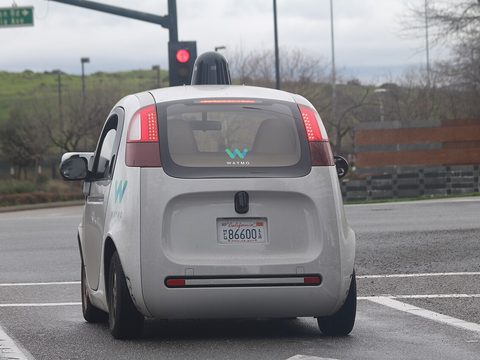
  • Nobody was at the wheel! The _____ stopped at the red light, waited, and then turned left all by itself.
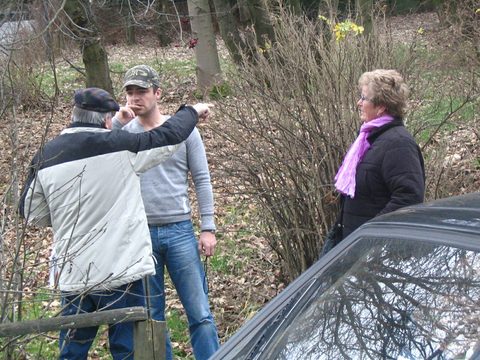
  • Excuse me, I'm lost. Can you give me _____ to the train station? Do I turn left or right here?
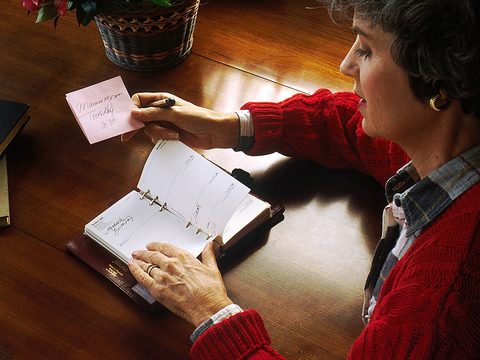
  • My _____ for Monday is full: a meeting at nine, a class at two and the dentist at five.

  • I always forget my mom's birthday, so this year I put a _____ on my phone for the day before.

  • Oh no, I made a _____ in the email! I wrote "Monday," but the meeting is on Tuesday.
EXERCISE 04Speaking · A1-A2

Beginner (A1-A2)

Ask and answer with a partner, or with me. Tap a card when you have answered it. Need help? Open the answer prompts and change the words in [brackets] for your own.

Answer prompts
1 · Yes, I have. / No, I haven't. I've heard of it, but I don't know much. 2 · I know [Google Assistant / Siri / Alexa / ChatGPT]. I use [Google Assistant] sometimes. 3 · Yes, I use [Google Assistant / Siri / Alexa]. / No, I don't use any of them. 4 · Yes, it can talk to people. / No, it cannot talk to people. 5 · Yes, AI can learn new things. / No, AI cannot learn new things. 6 · AI cannot [feel emotions / think like humans / make decisions on its own]. AI cannot [taste food / understand jokes / sleep]. 7 · Yes, AI can make mistakes. / No, I don't think AI can make mistakes. 8 · Yes, I would like a robot friend because [it would be fun / I would not be alone]. / No, I wouldn't like a robot friend because [it would be strange / I prefer human friends]. 9 · No, a robot cannot feel emotions like people. / Maybe, but robots can't feel the same way as humans. 10 · Yes, I would like an AI to help me study English. / No, I don't think I need AI for English. 11 · AI can help by [answering questions / organizing information / giving suggestions]. AI can help by [providing reminders / making schedules / helping with homework]. 12 · Yes, AI can help with shopping or traveling by [finding the best prices / giving directions]. / No, AI cannot help with shopping or traveling. 13 · Yes, AI can be dangerous if [it goes wrong / people use it badly]. / No, I don't think AI is dangerous. 14 · Yes, I would like to work with robots because [they can help a lot / they are interesting]. / No, I wouldn't like to work with robots because [it's too futuristic / I like working with people]. 15 · Yes, AI can create art or music. / No, AI cannot create art or music. 16 · Yes, AI can drive cars safely in some situations. / No, I don't think AI can drive cars safely. 17 · I feel [happy / curious / interested] when I talk to a chatbot. / I feel [strange / confused / bored] when I talk to a chatbot. 18 · Yes, people should be careful when using AI because [it can make mistakes / it can be dangerous]. / No, I think AI is safe and we don't need to worry. 19 · I would like AI to invent [a robot friend / a machine that helps with homework]. I would like AI to invent [flying cars / a time machine]. 20 · My robot would [clean the house / help me with schoolwork]. My robot would [cook dinner / play games with me].
0 / 0
EXERCISE 05Speaking · B1-B2

Intermediate (B1-B2)

Give your opinion, then a reason or an example from your life. Tap a card when you have answered it. The answer prompts give you a start; the words in [brackets] are only ideas.

Teacher Alvaro
Answer prompts
1 · When I hear "artificial intelligence," I think of [machines / robots / smart technology]. I imagine AI as something that can [help with tasks / solve problems / learn new things]. 2 · I use AI through [voice assistants like Siri / Google Assistant]. I also use AI in [recommendations on YouTube / music playlists / smart home devices]. 3 · Some examples of AI I know are [self-driving cars, Siri, Google Assistant]. I've also heard of AI in [robots, video games, smart refrigerators]. 4 · One advantage is that AI can [save time / make tasks easier / help with decision-making]. AI also [improves accuracy / offers personalized recommendations / can work 24/7]. 5 · A disadvantage of AI is that it might [replace jobs / make people dependent on technology]. Sometimes, AI can also [make mistakes / be biased / invade privacy]. 6 · AI can make our lives easier by [automating tasks / improving efficiency / giving us more free time]. It can also [provide helpful recommendations / make our homes smarter / assist in everyday tasks]. 7 · Yes, I think AI can replace some human jobs, especially in areas like [manufacturing, data entry]. However, I don't think AI can replace jobs that require [creativity, emotional intelligence, human connection]. 8 · Jobs in [customer service, transportation, manufacturing] are most at risk because of AI. AI can do tasks like [driving, answering questions, sorting data] more efficiently than humans. 9 · Yes, AI can create new jobs, especially in [AI development, robotics, data science]. It can also open opportunities in [AI maintenance, cybersecurity, ethical AI roles]. 10 · AI can help by [personalizing learning / providing instant feedback / helping students with different learning styles]. It can also [automate administrative tasks / help with online learning platforms]. 11 · Some dangers include [privacy concerns, dependence on technology, security risks]. There's also the risk that AI could [be misused / make biased decisions / replace human jobs]. 12 · Yes, I think AI should have limits, especially in areas like [privacy, decision-making, control over weapons]. AI should be used responsibly and not have too much power over [important decisions / personal data]. 13 · I trust AI technology to some extent, but I believe it still needs to [improve / be monitored closely]. / I'm not sure if I fully trust AI because [it can make mistakes / it doesn't understand emotions like humans]. 14 · Yes, I would like an AI assistant to [manage my schedule / control my smart devices / help with daily tasks]. / No, I wouldn't want an AI assistant because [I value privacy / I like doing things myself]. 15 · Yes, people are becoming too dependent on technology, especially in [communication, entertainment, navigation]. / No, technology is just making our lives [easier / more connected / more efficient]. 16 · AI can make language learning easier by [providing personalized lessons / offering instant feedback / practicing pronunciation]. It can also help by [suggesting learning materials / tracking progress]. 17 · AI can be creative in some ways, like [generating art, writing stories, making music]. However, I don't think AI can be as creative as humans because it lacks [emotions / the ability to think outside the box]. 18 · I might use AI to help with [choosing a job / finding a good restaurant / organizing my schedule]. I wouldn't use AI to make important life decisions like [choosing a partner / making personal choices]. 19 · Yes, I think the benefits of AI outweigh the risks because it can [improve efficiency / help solve problems / make life easier]. / No, I think the risks outweigh the benefits because it could [replace jobs / invade privacy / make us too dependent on technology].
0 / 0
EXERCISE 06Speaking · C1-C2

Advanced (C1-C2)

Take a position, support it with an example, and deal with the other side before you finish. Tap a card when you have discussed it. The answer prompts show one way in; the ideas in [brackets] are there to argue with, not to copy.

Answer prompts
1 · I would define AI as [a system designed to think and act like humans, using algorithms to analyze data and adapt to new information]. 2 · I believe that while AI can outperform humans in [specific tasks, like data processing or calculations], it may never fully surpass human intelligence due to [our unique ability to feel emotions, think abstractly, and create]. / On the other hand, AI could surpass us in [certain intellectual tasks] because of its [capacity for rapid learning and memory storage]. 3 · AI challenges traditional ideas of creativity by [producing art, music, or literature autonomously], which questions whether creativity is exclusively human. However, some argue that AI-generated works are merely reflections of human input and that true creativity requires [conscious thought, experience, and emotional depth]. 4 · One major ethical concern is the potential for AI to [invade privacy], as it can collect vast amounts of personal data without consent. 5 · AI should have limitations, particularly regarding [its autonomy and its role in critical decision-making]. I don't think AI should have legal rights similar to those of humans because it lacks [consciousness, emotions, or ethical judgment]. 6 · The social consequences could include [job displacement, increased inequality, and economic instability]. However, AI might also create new opportunities in sectors like [technology development, AI maintenance, and creative industries], although the transition could be challenging for certain workers. 7 · AI could revolutionize education by [providing personalized learning experiences, automating administrative tasks, and offering real-time feedback]. On the downside, AI may exacerbate [digital divides and the lack of human interaction] or reduce [teacher-student engagement], potentially leading to [a less empathetic educational environment]. 8 · AI should be limited in areas that require [moral judgment, empathy, or deep understanding], such as in [healthcare decision-making or personal relationships]. We draw the line where AI begins to [replace human interaction, compromise privacy, or make subjective decisions]. 9 · AI challenges traditional notions of work by [automating repetitive tasks, reducing the need for human labor, and creating a society that values efficiency over human effort]. This shift could lead to a reevaluation of [what constitutes meaningful work] and a society where [the value of human contribution is redefined]. 10 · AI algorithms can unintentionally reinforce bias if they are trained on biased data, leading to [discriminatory outcomes in hiring, law enforcement, or lending]. This happens because AI systems [learn from patterns in the data], which can reflect existing societal inequalities. 11 · Governments should establish clear regulations that address [data privacy, transparency in decision-making, and the ethical use of AI]. Laws should also ensure [accountability for AI decisions] and require regular audits to prevent [unintended harm or bias]. 12 · AI could undermine human relationships by [replacing face-to-face interactions, fostering dependency, and reducing emotional connections]. Additionally, the overreliance on AI for social interactions might lead to [increased loneliness, reduced empathy, and weakened social bonds]. 13 · AI can enhance human creativity by [offering new tools, techniques, and inspiration], enabling artists to push boundaries and experiment with novel ideas. However, some argue that AI may diminish creativity by [encouraging overreliance on algorithms and reducing the human element in artistic expression]. 14 · Yes, there should be strict limitations on AI's data collection, particularly in terms of [sensitive personal information, privacy rights, and consent]. These limitations are necessary to ensure that AI systems don't [expose individuals to harm, misuse their data, or create surveillance states]. 15 · An AI data monopoly could lead to [a concentration of power, loss of privacy, and market control by a few large companies]. This would also raise concerns about [data security, unequal access to AI technology, and the exploitation of consumer data for profit]. 16 · Governments and industries should invest in [retraining programs, upskilling workers, and creating new job opportunities in AI-related fields]. They should also ensure that the benefits of AI are distributed [fairly, supporting workers in low-skill sectors with economic and social safety nets]. 17 · AI can generate creative works without direct human input, but it is always influenced by [data and patterns created by humans]. In this sense, AI's creativity is inherently a reflection of [human creativity and the input it receives].
0 / 0
EXERCISE 07Writing

My answer in writing

80–120 words. Choose one question from your level (Exercise 04, 05 or 06) and write the question number first. Then give your answer, two reasons or examples, and one sentence about the other side. Start with the answer prompt if you like, then continue with your own ideas.

Teacher Alvaro
0 words
ENDEnd of lesson

My results

Check your score, then copy it and send it to your teacher on WhatsApp.

Teacher Alvaro

One job for this week. Ask a chatbot or your voice assistant one question in English every day, and read the answer out loud. Then check it: is it right, or did the machine make a mistake? Bring your best example to the next class.